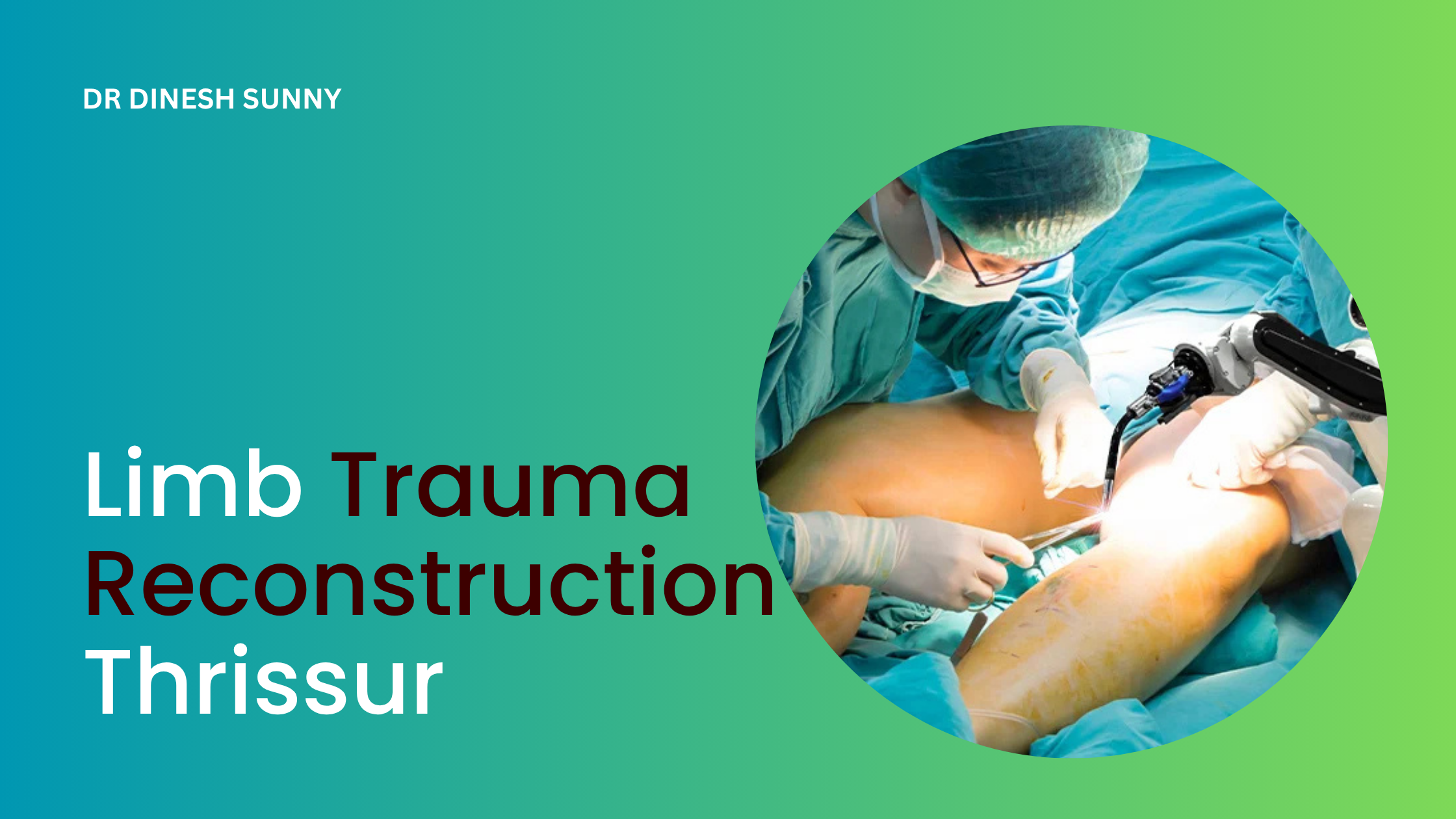
Limb trauma reconstruction stands at the intersection of life-saving emergency care and advanced reconstructive surgery. In the growing medical hub of Thrissur, Kerala, patients suffering from serious limb injuries—caused by road traffic accidents, industrial mishaps, sports injuries, or unexpected trauma—now have access to world-class medical facilities equipped with specialized surgical units. Limb trauma reconstruction in Thrissur has evolved with the advancement of microsurgical technology, state-of-the-art imaging, and the collaboration of multidisciplinary medical teams that work toward one goal: saving and restoring limbs that might otherwise face amputation. The primary aim of this branch of surgery is not only to repair the visible damage but also to restore the limb’s full functionality, appearance, and strength, enabling patients to return to normal life. This treatment emphasizes holistic recovery—addressing physical, psychological, and emotional well-being after a traumatic injury. Over the years, the field has witnessed remarkable innovations, from bone lengthening procedures to free tissue transfers, all of which have improved patient outcomes significantly. Thrissur’s advanced trauma care facilities and skilled reconstructive surgeons ensure that even the most complex cases receive immediate and comprehensive care. In this blog, we will explore the concept of limb trauma reconstruction, understand its necessity, discuss why Thrissur has emerged as a preferred destination, examine the treatment procedure, and provide a comprehensive overview for those seeking hope after a devastating injury.
Understanding Limb Trauma Reconstruction
Limb trauma reconstruction is an intricate medical process designed to repair and rebuild limbs that have suffered significant structural and soft tissue damage. When a limb endures a complex injury involving broken bones, crushed muscles, torn ligaments, damaged nerves, or disrupted blood flow, traditional treatments like casting or stitching are not enough. This is where reconstructive surgery becomes essential. The objective is to preserve the natural structure of the limb while restoring its ability to move, feel, and function as normally as possible. This often requires multiple surgical stages, ranging from stabilizing fractures to repairing soft tissue and performing microsurgery for nerves and vessels. In severe cases where parts of the bone or skin are missing, surgeons may use grafts or flaps—tissue transplanted from other parts of the body—to cover exposed areas and encourage healing. Advanced techniques such as bone transport or the Ilizarov method help in regenerating bone where there has been significant loss. Limb trauma reconstruction also incorporates nerve grafting, tendon transfers, and vascular reconstruction to ensure proper blood circulation and sensation. Rehabilitation forms an essential part of this process, focusing on regaining strength, flexibility, and coordination through physiotherapy and occupational therapy. The ultimate goal is not just survival of the limb but complete functional restoration, allowing patients to walk, grip, or carry out daily tasks independently. Early diagnosis, timely surgical intervention, and a comprehensive treatment plan are the cornerstones of successful limb reconstruction, and Thrissur’s medical institutions are well-equipped to provide these integrated services.
Why Choose Thrissur for Limb Trauma Reconstruction
Thrissur has rapidly emerged as one of Kerala’s most trusted destinations for limb trauma reconstruction, thanks to its advanced healthcare infrastructure and availability of skilled specialists. The city is home to several renowned hospitals with dedicated departments for reconstructive and plastic surgery, orthopaedics, and trauma management. These centres offer 24/7 emergency trauma units, equipped with advanced imaging facilities and modular operation theatres that can handle complex injuries. One of the biggest advantages of choosing Thrissur is the presence of experienced multidisciplinary teams. Surgeons here work alongside orthopaedists, vascular specialists, anaesthetists, physiotherapists, and occupational therapists to ensure complete, coordinated care from admission to recovery. Another factor that makes Thrissur stand out is accessibility. Patients from across Kerala and neighbouring regions can easily reach the city, which reduces critical treatment delays—an essential factor in trauma reconstruction. Over the years, Thrissur has developed a strong reputation for its patient-centric approach, combining medical excellence with compassionate care. Many hospitals also provide post-operative rehabilitation and follow-up clinics to help patients regain mobility faster. Additionally, Thrissur’s healthcare system focuses on affordability without compromising quality, offering treatment options that meet international standards at reasonable costs. The combination of expert care, advanced technology, and personalized treatment plans make Thrissur a beacon of hope for those recovering from severe limb injuries. Whether it’s a complex bone fracture or a soft-tissue defect requiring microsurgery, the city’s medical institutions are fully capable of handling every stage of limb trauma reconstruction with precision and empathy.
Treatment Procedure
The treatment process for limb trauma reconstruction in Thrissur is a carefully structured, multi-phase approach tailored to each patient’s specific injury. The journey begins with an immediate and thorough assessment in the emergency department, where doctors evaluate the extent of damage to bones, muscles, nerves, and blood vessels. Imaging tools such as X-rays, CT scans, and MRIs help determine the internal condition of the limb. Once stabilized, the reconstructive team formulates a detailed surgical plan. The initial phase usually involves cleaning and debriding the wound to remove dead tissue, followed by stabilizing the bone using plates, screws, or external fixators. This is crucial to prevent infection and maintain limb alignment. In the second phase, surgeons focus on restoring soft-tissue coverage using skin grafts or muscle flaps. Microsurgical techniques allow surgeons to reconnect blood vessels and nerves under high magnification, restoring circulation and sensation to the injured area. In more complex cases, bone grafting or bone lengthening techniques like the Ilizarov method are used to reconstruct missing sections. The post-surgery recovery phase is equally vital. Patients receive wound care, pain management, and early physiotherapy to prevent stiffness and maintain mobility. Rehabilitation continues for several months, emphasizing gradual strengthening and functional training. Follow-up visits are scheduled to monitor bone healing, nerve regeneration, and overall limb performance. The coordinated effort between the surgical, physiotherapy, and nursing teams ensures that each patient receives continuous support throughout their recovery. With proper adherence to medical advice and therapy, patients can regain significant limb function and lead an active life once again.
Overview
Limb trauma reconstruction is both an art and a science, requiring precision, patience, and teamwork. In Thrissur, medical professionals approach each case with a holistic mindset that extends beyond surgical repair to total rehabilitation. The process integrates advanced orthopaedic and plastic surgery techniques to address structural damage, while physiotherapists and occupational therapists focus on functional recovery. The success of limb reconstruction depends on timely treatment, proper wound management, and dedicated post-surgical care. Patients who receive early intervention have a higher likelihood of regaining limb function and avoiding long-term disability. Over the years, technological advancements such as microsurgical free flaps, nerve grafts, and 3D imaging have significantly improved success rates. Thrissur’s medical facilities continue to embrace these innovations, offering patients access to treatments that once were limited to metropolitan hospitals. The emphasis is always on achieving balance—ensuring stability, restoring sensation, and promoting mobility. Beyond the clinical outcomes, the emotional and psychological rehabilitation of patients also receives due importance. Trauma can leave deep scars, and the ability to regain control of one’s body and movement is transformative. Thus, the process of limb reconstruction symbolizes resilience, precision, and hope. In Thrissur, these procedures are not just about saving a limb—they’re about restoring life’s rhythm, independence, and confidence to patients who once thought recovery was impossible.
Conclusion
Opting for limb trauma reconstruction is a courageous step toward recovery and independence. For patients in and around Thrissur, access to advanced surgical techniques and multidisciplinary care means that the chances of limb preservation and restoration are higher than ever before. Every reconstructive journey begins with timely medical attention and is sustained by consistent rehabilitation. Thrissur’s hospitals emphasize both—immediate trauma management and long-term functional recovery—ensuring that patients receive comprehensive, compassionate care. The combination of surgical expertise, personalized therapy programs, and patient education helps individuals regain their confidence, mobility, and overall quality of life. Choosing a trusted centre in Thrissur for limb trauma reconstruction means placing your recovery in the hands of professionals who understand the delicate balance between medical precision and human empathy. Ultimately, limb reconstruction is about more than healing wounds—it’s about rebuilding strength, restoring dignity, and reigniting the will to live life fully. In the hands of skilled specialists, what begins as a devastating injury can transform into a story of survival, resilience, and renewed purpose. Thrissur stands as a beacon of hope, offering world-class reconstructive care that empowers patients to walk, work, and thrive again.
FAQ
When should a patient consider limb reconstruction surgery?
A patient should consider limb reconstruction surgery when an injury has caused major bone fractures, exposed bones, tissue loss, or damaged blood vessels and nerves. If there is a risk of losing the limb or long-term disability, reconstructive surgery can help save and restore it. The sooner the intervention takes place, the better the outcome—especially when performed in a well-equipped centre in Thrissur.
How is limb trauma reconstruction different from regular fracture treatment?
Standard fracture treatment usually focuses on bone alignment and healing, while limb trauma reconstruction addresses much more complex injuries. It involves restoring not only the skeletal structure but also soft tissue, nerves, and blood circulation. Advanced techniques such as microsurgery and free-tissue transfer are often used to rebuild damaged areas. This comprehensive approach ensures both functional and aesthetic recovery.
How long does recovery take after limb reconstruction?
Recovery duration varies depending on the severity of the injury, the type of surgery performed, and the patient’s overall health. Typically, initial healing takes a few weeks, but complete rehabilitation may extend over several months. Physiotherapy and occupational therapy play vital roles in regaining strength, flexibility, and coordination. Regular follow-ups in a Thrissur-based rehabilitation centre help ensure continuous progress.
Are limb reconstruction surgeries painful?
Patients are kept comfortable during surgery under general or regional anaesthesia, so there is no pain during the operation. Post-surgery, pain is managed effectively through medications, physiotherapy, and guided recovery programs. Modern pain-management protocols used by reconstructive teams in Thrissur ensure that discomfort remains minimal throughout the healing process.
Can every damaged limb be reconstructed?
Not all injuries can be fully reconstructed, but many that once required amputation can now be salvaged thanks to advanced microsurgical and orthoplastic techniques. The decision depends on the extent of bone and soft-tissue loss, blood circulation, infection, and the patient’s general health. Surgeons in Thrissur assess each case individually to determine whether limb salvage or reconstruction is the best option.
What are the risks associated with limb reconstruction?
Like any major surgery, limb reconstruction carries some risks, including infection, delayed healing, nerve damage, or graft/flap failure. However, when performed by experienced specialists using modern techniques, these risks are significantly reduced. Proper post-operative care, hygiene, and regular monitoring are crucial in ensuring successful outcomes.
What role does physiotherapy play after reconstruction?
Physiotherapy is a cornerstone of recovery after limb reconstruction. It helps restore joint movement, muscle strength, balance, and coordination. In Thrissur, many hospitals offer integrated physiotherapy programs where therapists work closely with surgeons to create personalized rehabilitation plans. Early and consistent therapy greatly improves long-term results and functional independence.